Does Your Coil Package Need Eye-Through Wrapping?
A machine called "eye-through" does not prove the bore is covered — incomplete wrapping is invisible from outside the package. This guide shows how to specify, test, and inspect true eye-through coverage before acceptance.

Eye-Through Wrapping: When Must Film Pass Through the Coil Eye?
Eye-Through Wrapping: When Must Film Pass Through the Coil Eye?
Steel coils are ring-shaped. An ordinary wrapper that only travels around the outside can leave the inner bore and part of the side faces unprotected. Eye-through wrapping passes the film through the coil eye so the material covers the full cross-section and bore surface.
This guide explains when eye-through wrapping is required and how to verify that the machine on an automatic coil packing line actually delivers it.
| Package requirement | Wrapping approach |
|---|---|
| Outer circumference only | Standard outer wrap |
| Inner bore and side faces | Eye-through wrapping |
| Full cross-section | Eye-through wrapping plus the protection sequence |

The image shows a steel coil wrapping machine. The machine name does not prove eye-through coverage; the finished package must be inspected to confirm that the bore and side faces are covered.
Understand the Coverage Problem
A coil has an outer circumference, two side faces, and an inner bore. A wrapper that rotates around the outside covers the outer surface but cannot reach the inner diameter. If the packaging requirement includes the bore and side faces, the film path must change.
Eye-through wrapping means the wrapping material is routed through the coil eye during the cycle, creating a continuous coverage pattern around the cross-section.
Decide from the Packaging Requirement
Use eye-through wrapping when the specification requires protection of the full coil cross-section, the inner bore, or the side faces. It is common for coils that will be stored outdoors, shipped overseas, or handled in a way that exposes the bore.
If the bore does not need protection, a standard outer wrap may be acceptable. The decision should come from the package specification, not from the machine name.
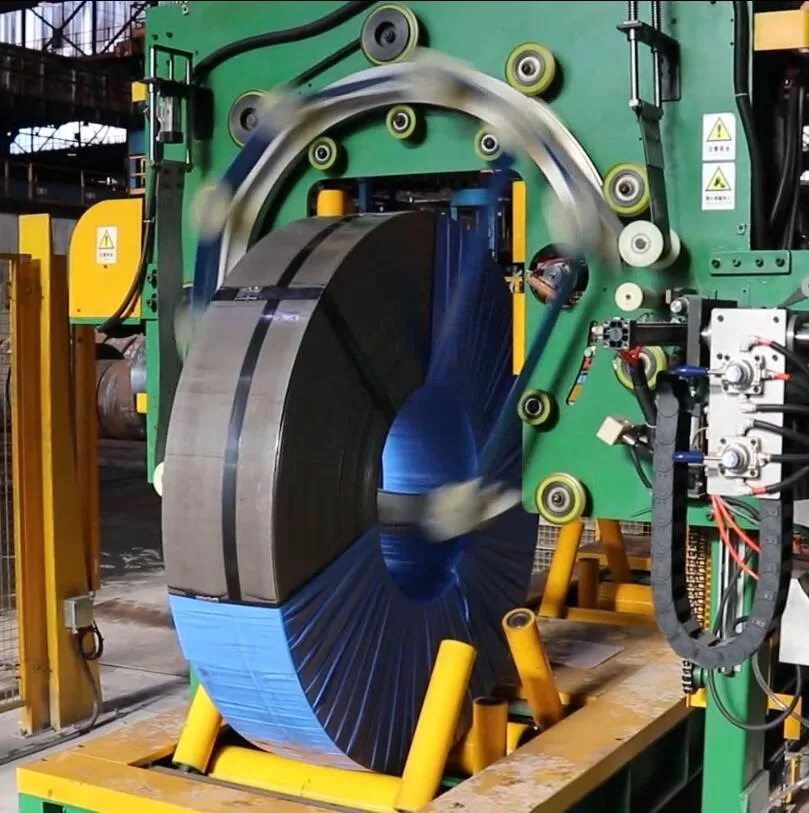
The image shows a steel coil packing machine. The decision to use eye-through wrapping comes from the required package, so the machine should be selected after the bore and side-face coverage requirement is written down.
Verify the Material Path
Ask the supplier to show the material path through the coil eye, the positioning method, and how the film starts, wraps, and cuts. A machine described as eye-through must demonstrate coverage of the bore and side faces on a representative coil.
Do not rely on a label or a marketing description. Verify the finished package after the cycle.

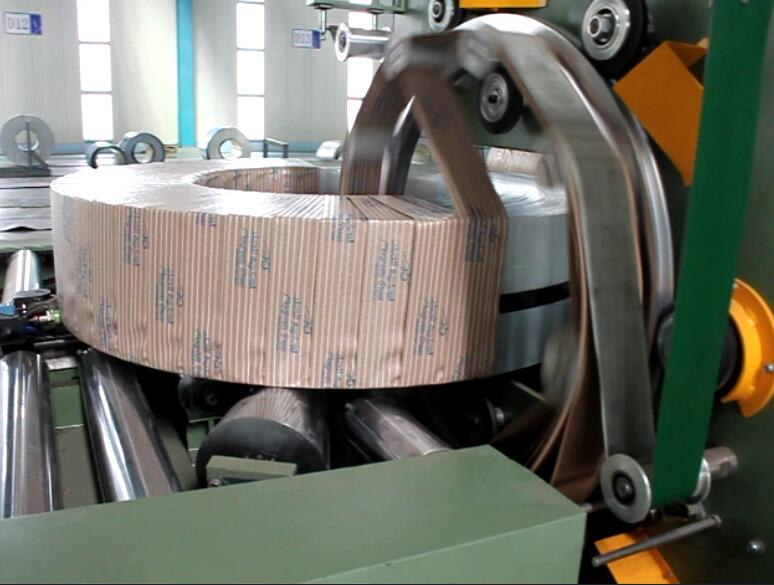
The image shows a coil wrapping machine. The material path through the coil eye must be shown and tested, because incomplete coverage in the bore is not visible from the outside of the package.
Check Overlap and Tail Control
Eye-through wrapping depends on controlled tension, overlap, and tail sealing. If the material path is interrupted or the coil is not centered, coverage can be incomplete. Test the pattern at the beginning, middle, and end of the cycle.
The tail should stay sealed after the coil is moved, not only while it is stationary.
Combine with Protection Materials
Eye-through wrapping can be combined with paper, VCI film, edge protection, and side plates. The sequence should be defined: inner protection, edge protection, wrapping layers, and outer sealing.
The wrapping station should not be expected to repair damage that should have been prevented before wrapping.
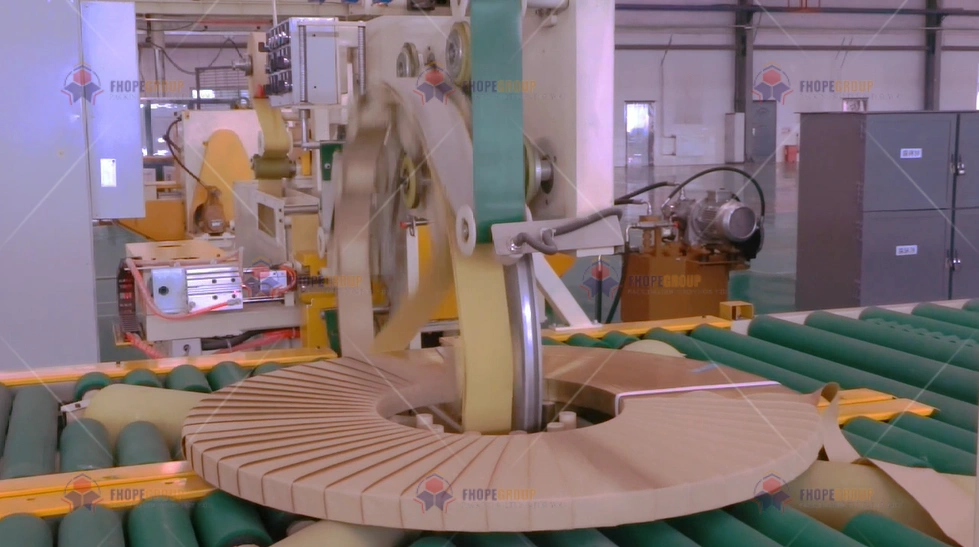
The image shows packing material used with a coil wrapping machine. Eye-through coverage is only part of the recipe; inner protection, edge protection, and outer sealing must be combined in the correct sequence.
Validate with the Hardest Coil
Test the wrapping pattern on the coil with the smallest inner diameter, the largest outer diameter, and the most sensitive surface. Record the coverage, overlap, and final package condition.
A Practical Next Step
Add the bore and side-face coverage requirement to the package specification. During FAT or SAT, inspect the wrapped cross-section and bore on representative coils and keep the evidence.
Use the same coverage evidence to compare the automatic coil packing line configuration before acceptance.
Watch how an automatic horizontal wrapping machine wraps slit steel and copper coils:

Visual Details

Click to enlarge

Click to enlarge
Click to enlarge

Click to enlarge
Watch How It Works
Discover how our automated packaging solutions optimize your production line efficiency. This video demonstrates the seamless operation designed for maximum protection.
Trusted by Steel Mills & Industry Leaders
Global manufacturers rely on FHOPE heavy duty packaging equipment


Ready to optimize your packaging line?
Get a custom quote with ROI analysis. Our engineers respond within 24 hours.
- Free layout design
- Global installation support
- 2-year warranty included
Your information is secure and will never be shared.
Related Machines
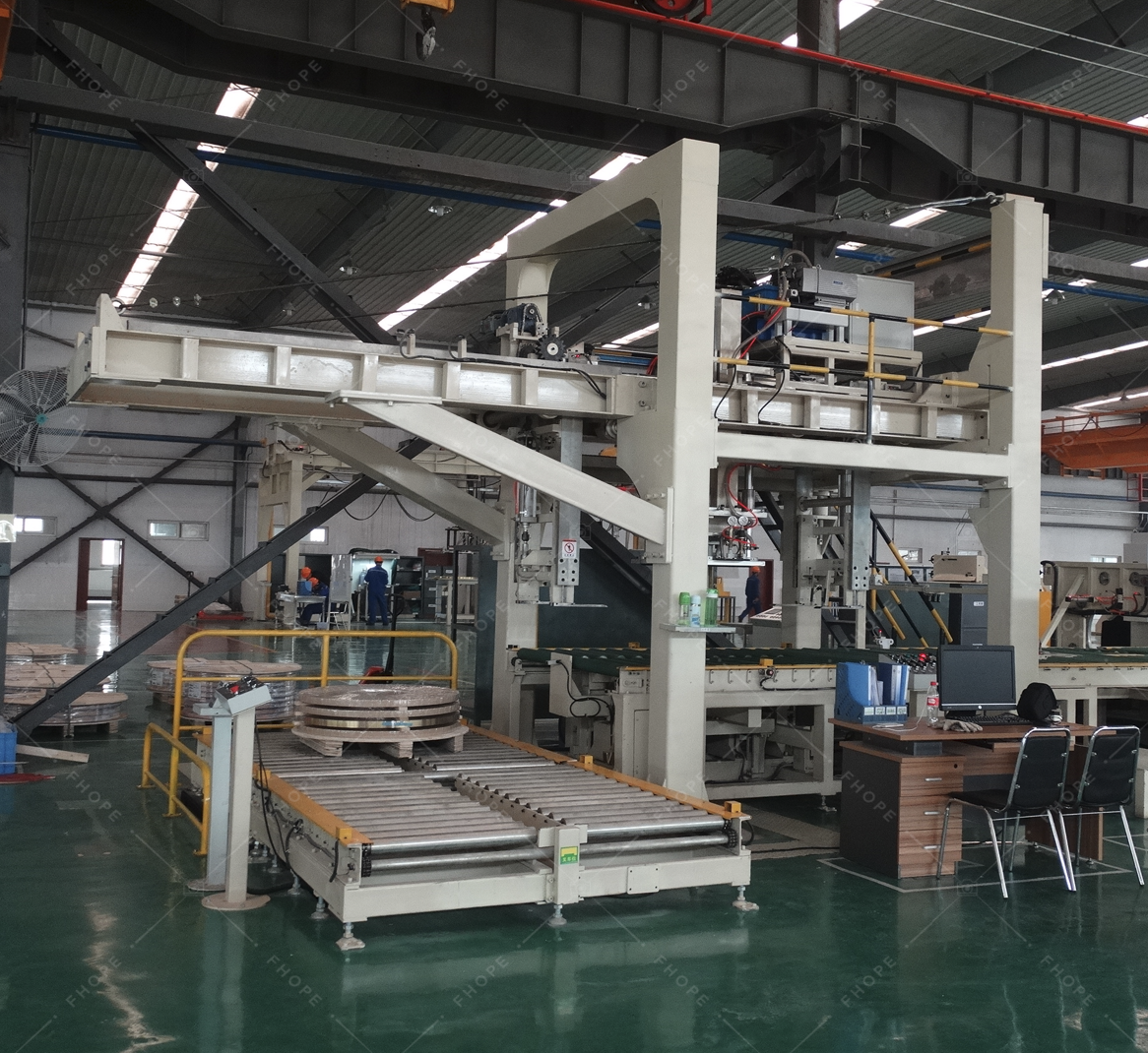
Steel Coil Packaging line
View Details →
Vertical coil packaging line
View Details →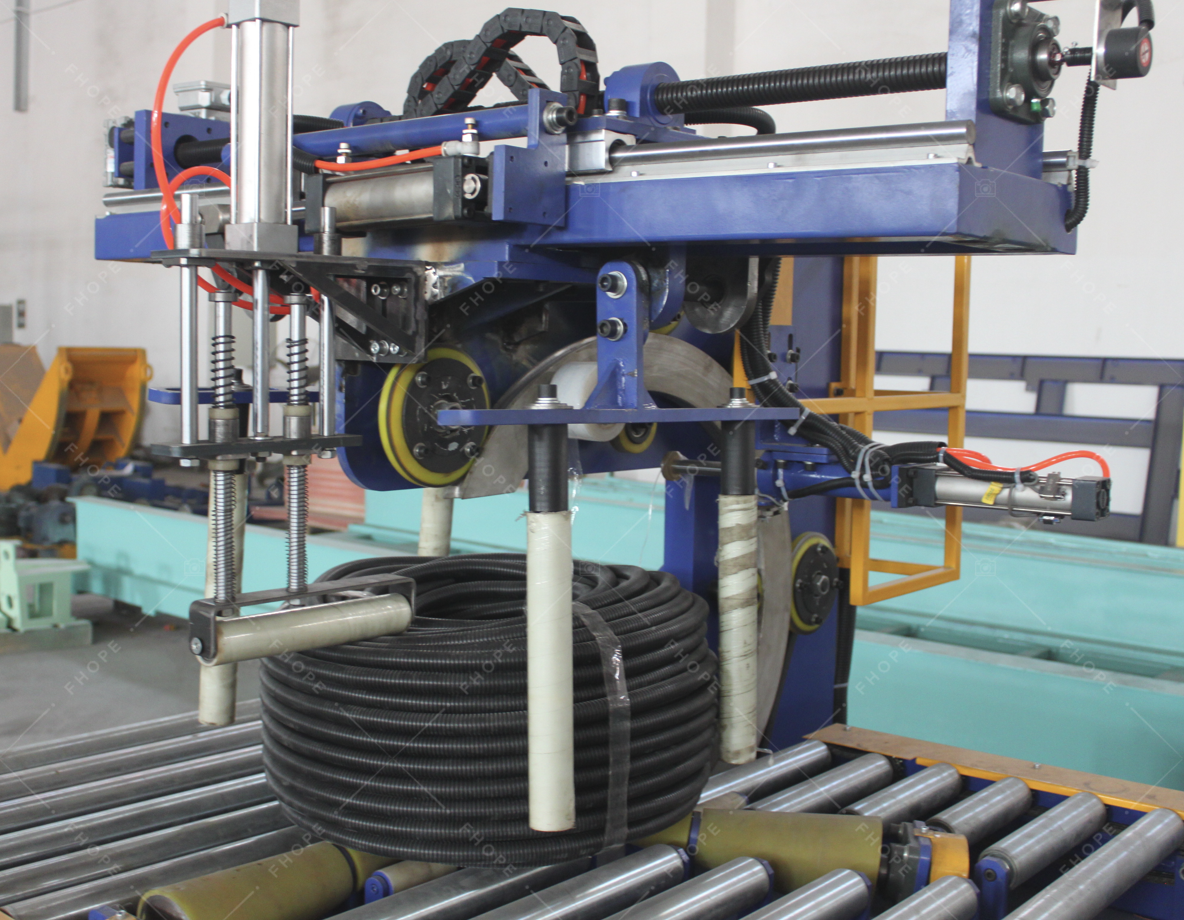
Hose Coil Packaging line
View Details →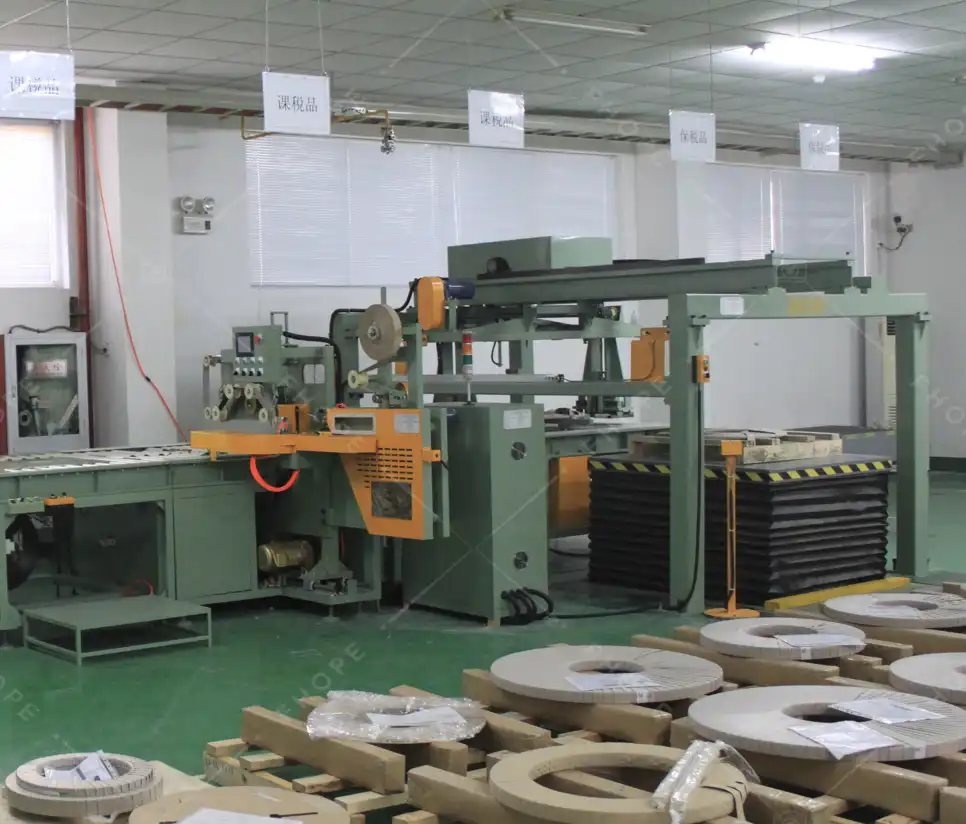
Copper Coil Packaging line
View Details →
Wire Coil Packaging line
View Details →
Panel Packaging line
View Details →
Pipe Bagging Machine
View Details →
Aluminum profile packing line
View Details →
FHOPE Automatic pipe tube bundling&strapping line
View Details →
Automatic pipe tube bundling & strapping line
View Details →
Automatic steel tube strapping machine
View Details →
FHOPE Automatic steel tube packing machine
View Details →
Automatic plastic Pipe strapping packing line
View Details →
Automatic PPR/PVC Pipe bagging line
View Details →
Platsic pipe bag packing machine
View Details →
Tyre Packing Machine FPT-200
View Details →
Tyre Packing Machine FPT-300
View Details →
Tyre Packing Machine FPT-400
View Details →
Cable Coil Packing Machine-FPCA100
View Details →